This past weekend was very wet. Thunderstorms on Thursday turned into snow. Inches and inches of snow on Friday and Saturday and I cooped myself up inside with a fire and some wool to wait it out. Kyle was out of town this weekend and I made very crafty plans to keep myself occupied. Much better than twiddling my thumbs. Shockingly, then, I have very little to show you and I finished exactly nothing, but I did weave, and I did spin, and I did knit. Because the weekend was very wet.
My big plan was to tackle the bag of fleece I had been gifted by a friend who is caring for a flock of Shetland sheep. She had told me these had been sitting around in a bag for several years. So long that the original bag was full of holes and falling apart, so it got put into another, newer bag. I was worried about bugs and mice and time getting their hands on this wool and I didn’t want to leave it exposed to all sorts of possible sabotage. I wanted to sort it and wash it and seal it away, kept safe from nefarious critters hoping to find a weak spot, a meal, a home in this wool.
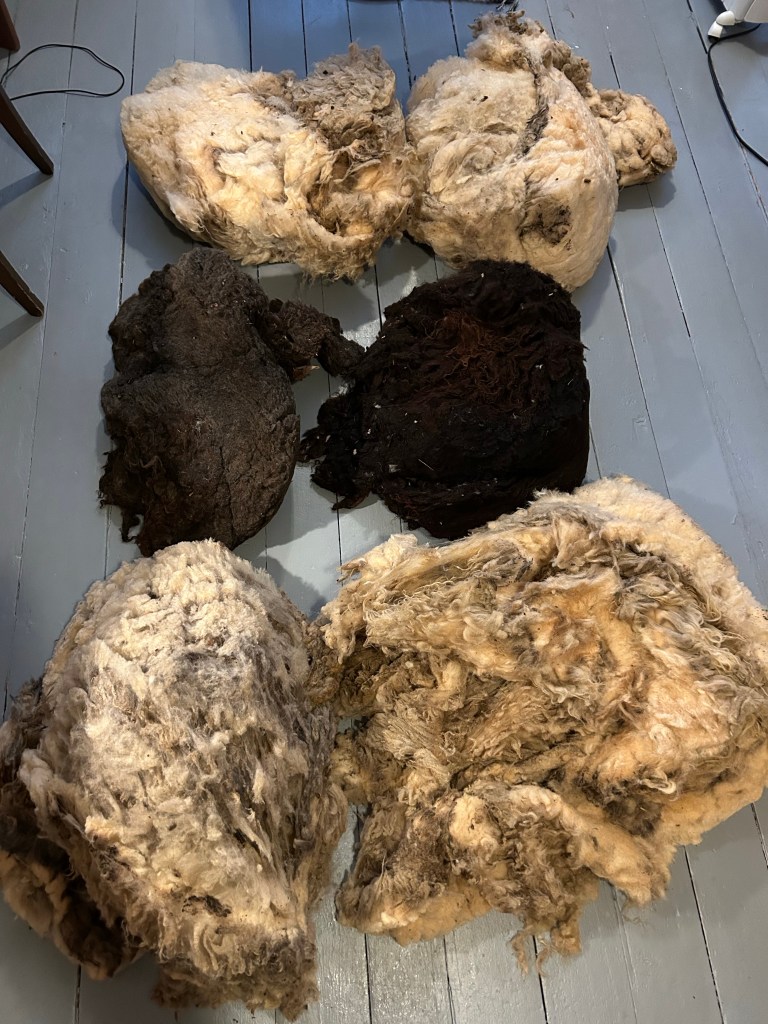
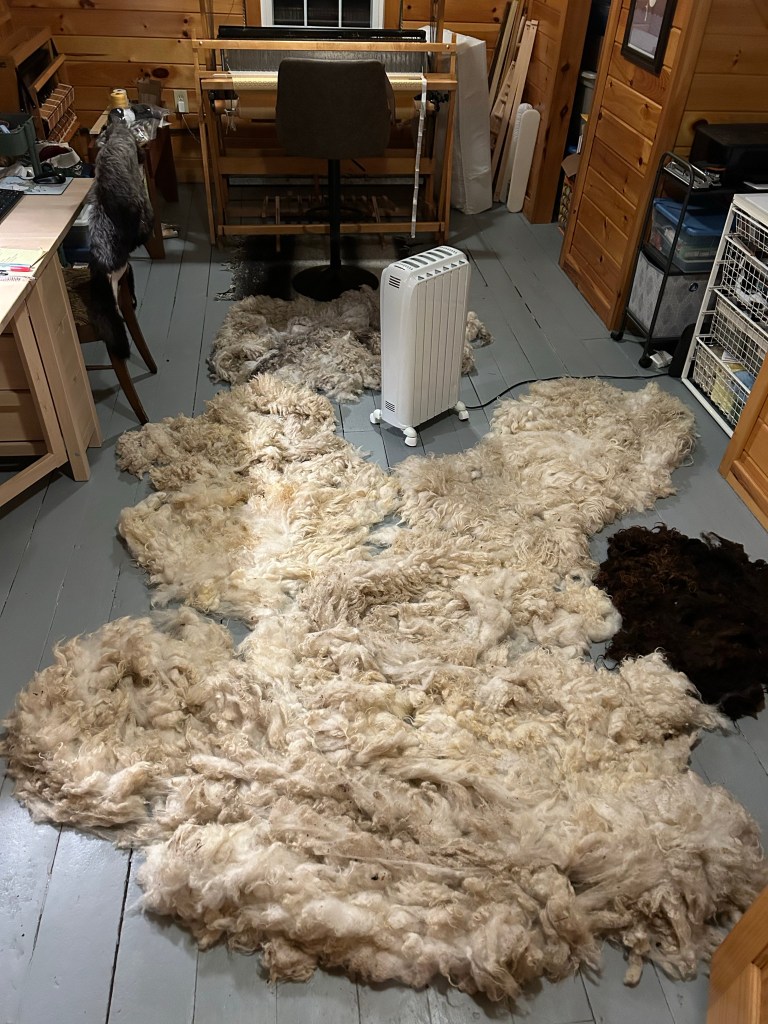
I had hoped to do this all outside on a nice sunny day, but the weekend had other plans. So I cleared the floor in my craft room/office and got to work. After assessing what I had here, I laid out each fleece individually to skirt it – removing all of the unwanted parts. Dirty parts, matted parts. All of the short leg hair, the second cuts, the sun-dried brittle parts.
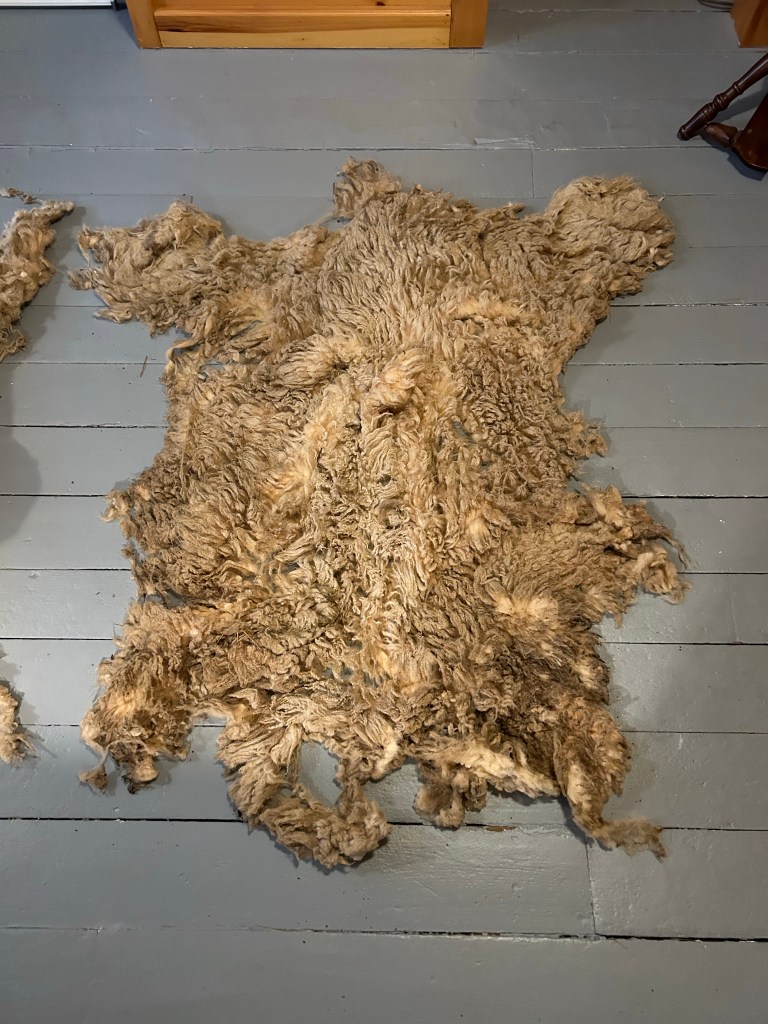
It was interesting to see each fleece on its own because they were all so different from one another. The crimp structure, the fiber quality, the softness of hand was all over the spectrum. My friend mentioned on Saturday that she suspects these sheep are not all pure Shetland, and I would be quick to agree with her. The size of fleece from sheep to sheep varied, as did the fiber. Some had clear double coats – long, coarse guard hairs concealing shorter down fiber, while others had a close crimp and a softness throughout.
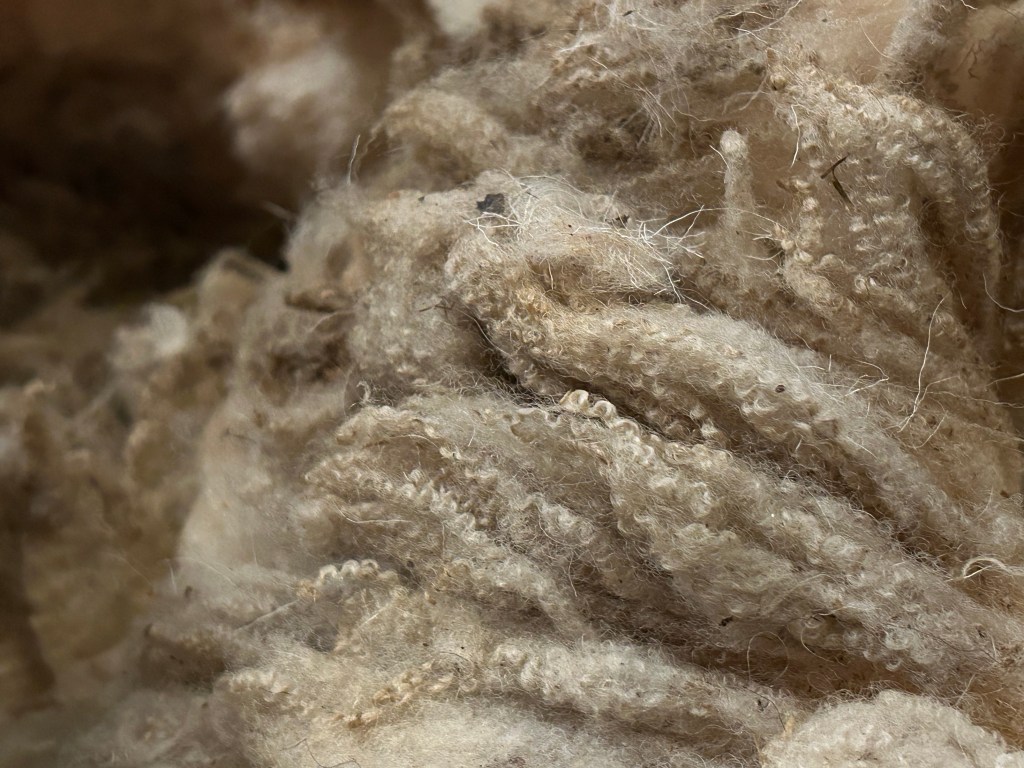
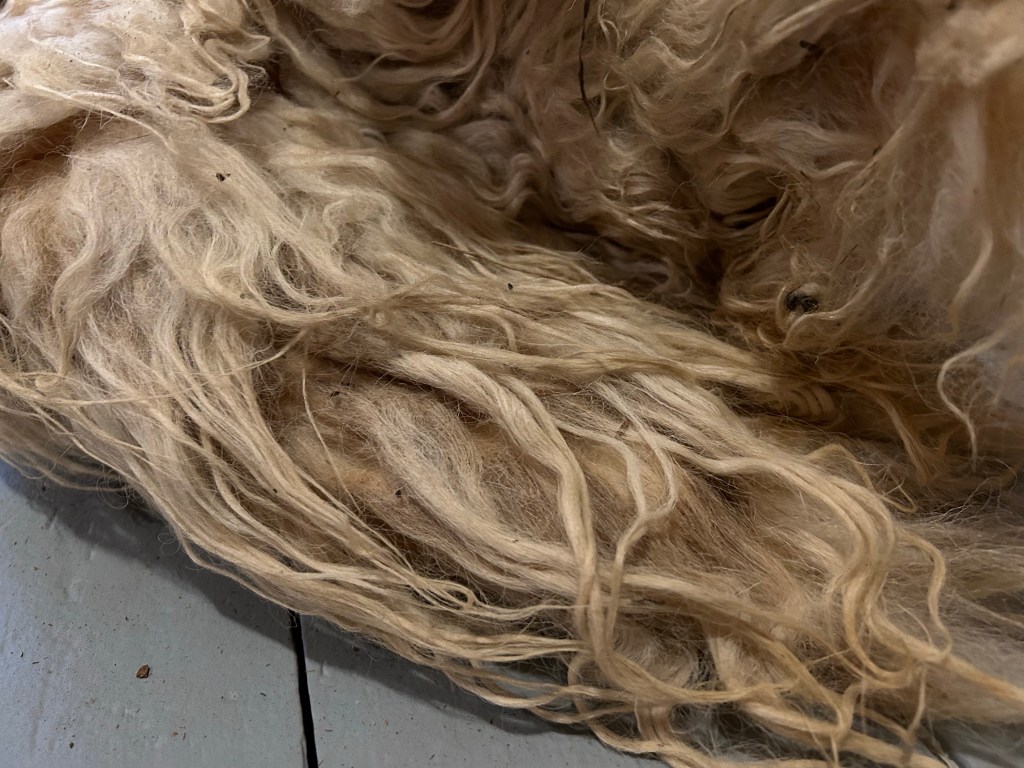
I admit I don’t know what I am going to do with any of this wool quite yet. I got rid of a lot of it because it was so matted, so dirty, so brittle that it wasn’t worth keeping. But the rest I scoured and laid out to dry before packing it away.
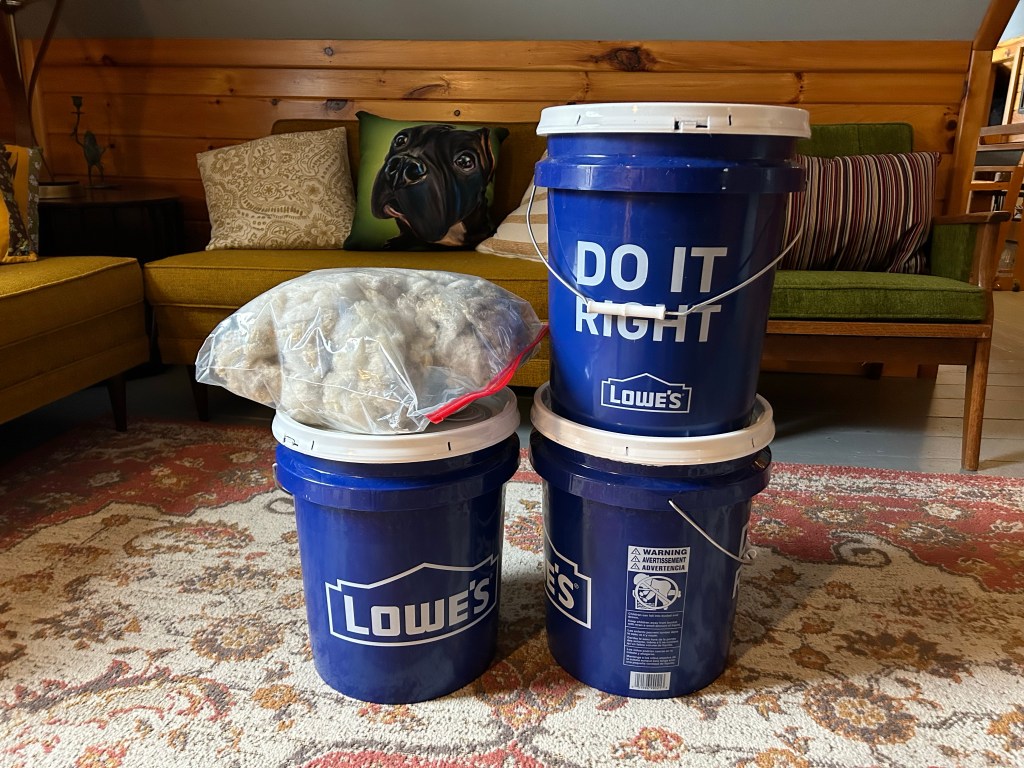
I like to store my fleece in big 5-gallon buckets from Lowe’s, or Menards, or anywhere else that sells buckets with airtight lids. To me this keeps the wool protected from creatures, moisture, and air. I have some fleece stored “raw” this way – unwashed, still in the grease. but air and time are a big enemy of raw fleece. The waxes and oils in a fleece can begin to crystallize and become gummy, sometimes impossible to wash out. Knowing how long these had already been sitting in a torn plastic bag I wanted to make sure I washed them sooner rather than later to prevent that from happening if I could. So now I have my three buckets packed to the brim and ready to store away in the shed, waiting until inspiration strikes.
I kept out about 200g to play with to see if it gives me an idea of what I can do with this wool. I will card it and spin it up to see what I get. There is quite a bit of VM – vegetable matter – embedded in this fleece. Seeds and hay and straw and bits of the pasture the sheep carries around on its back. The carding will help to get some of that out, but it will also tell me if this wool is strong enough to withstand processing. I tested locks from each fleece as I was skirting it and a lot of it seems to be on the weaker side and prone to breakage. That can cause a lot of nepps and noils while carding, which results in a lumpy yarn that is prone to pilling and wearing thin. It may still have its use, but we will have to play and see. until then, I am glad to have this put away more securely for safe keeping. How did you spend your weekend?
Until next time, stay creative.


 Spring Creek Textiles
Leave a reply to kdgehlhar Cancel reply