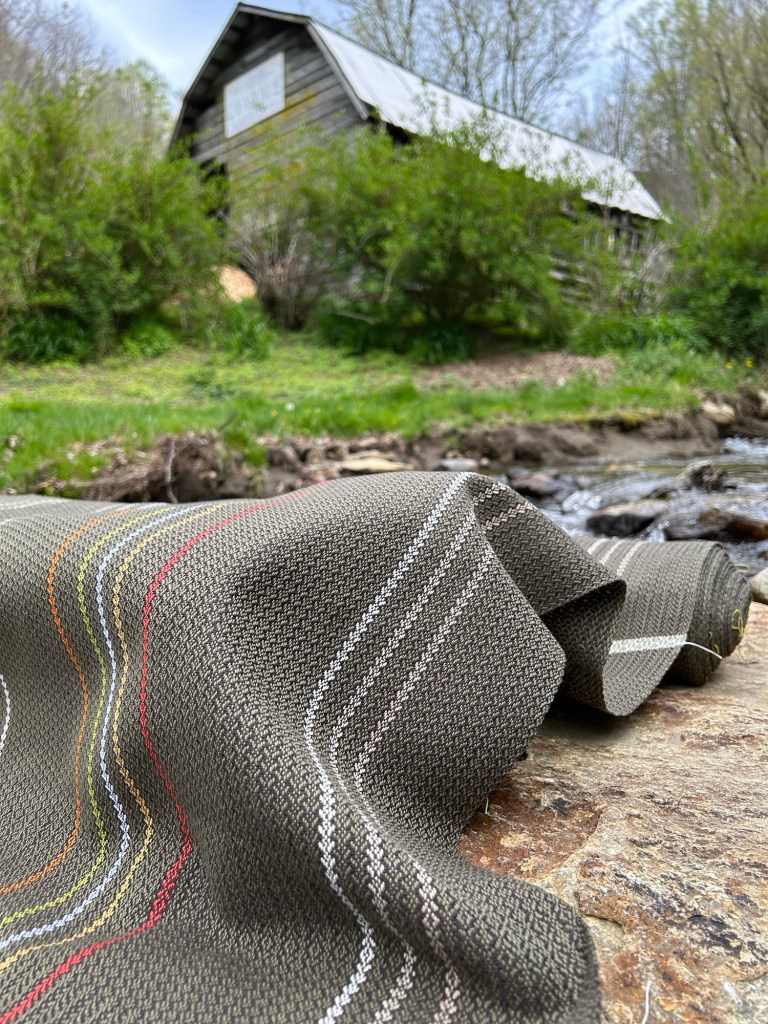
I’ve been working my way through the longest warp I have ever put on my loom for the past two months, and it is such a nice feeling to know that the finish line is right around the corner. I started with a warp of about 53 or 54 yards, which should be enough to make about 50 kitchen towels. This is now officially the second time I have rewoven one of my designs. I really enjoy the process of designing new towels, but there’s something nice about returning to something familiar. This is my “Field of Flowers” design that I was originally taking photos of in the light rain on the morning that Hurricane Helene hit our area and it feels like it has been both the longest and the shortest seven months I have ever experienced.
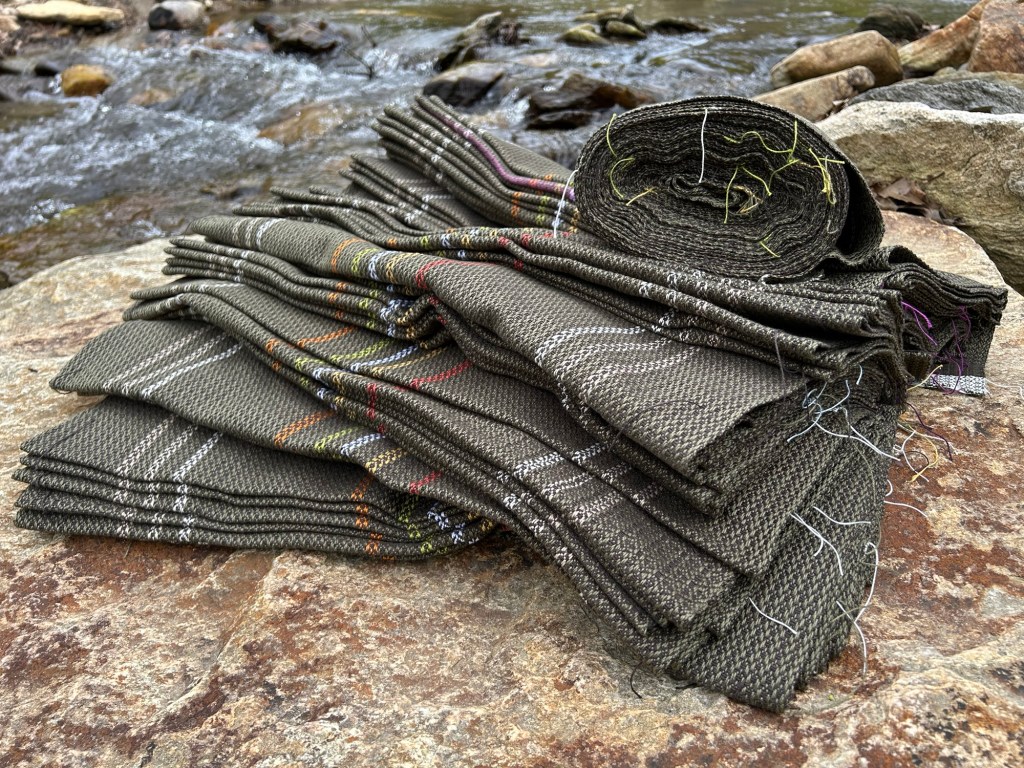
Part of my desire to return to this pattern was to reclaim it from being intermingled with memories of Helene, though I don’t think I will ever be able to fully separate the two in my mind. And my other reason for repeating it was simply that it was surprisingly (to me) very popular! I have to admit, once I started weaving these the first time I thought to myself “oh, this is kind of a dud…” but the feedback I have gotten from others, including Kyle, is that this might be their favorite design I have ever done! Now, I do have to remind myself that the people who really loved it the first time likely already have one and don’t need more, so I don’t expect these to sell quite so quickly, but it’s not a terrible thing to have some inventory available.
This pile of fabric is 45 towels-to-be, and there’s still quite a bit of finishing work to be done before I can make them available. I have two left to weave, and then there’s about an hour of work per towel before I can call them finished. It’s a long road of cutting, washing, drying, pressing, hemming, labeling, packaging… but it’s so satisfying to see it all coming together. I won’t have all of them complete this week, but hopefully enough that I can feel comfortable listing them in my shop while I continue working through what’s remaining. It’s interesting, I’ve seen some weavers talk about how they could never imagine knitting four or six of the same project because they would just get so BORED and yet here I am nearing that 50 mark and I feel like I could just keep going! But I do need to get these done lickety-split because I have to get cruising on my next project ASAP.
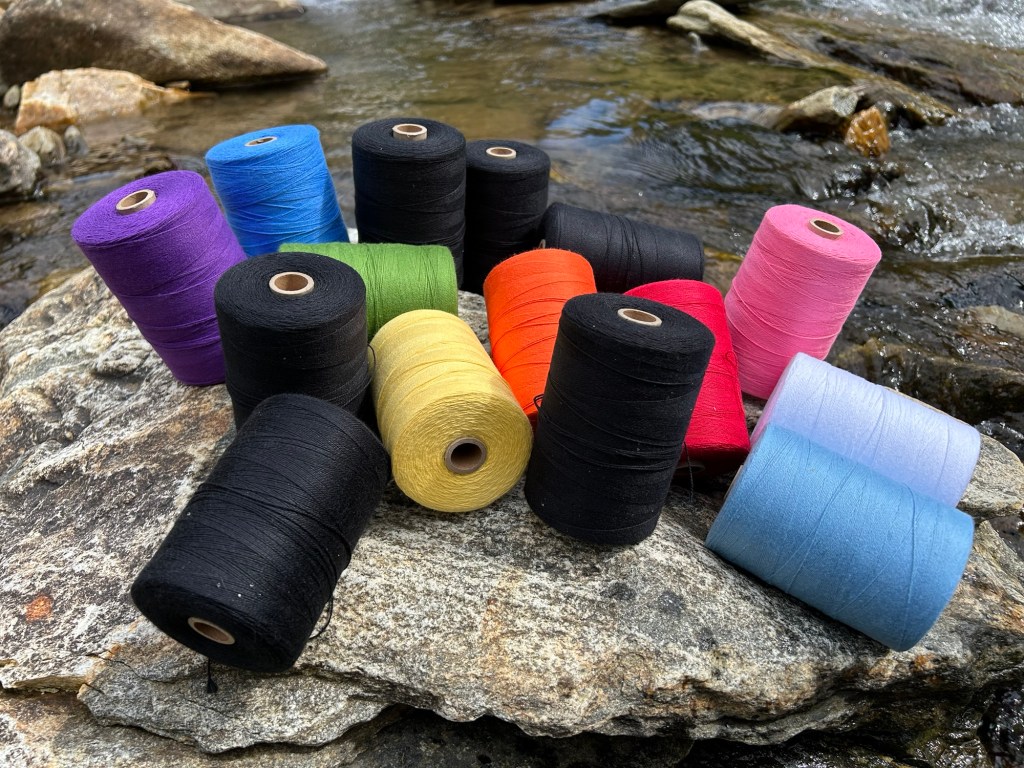
Any guesses what the theme of this design is? (That’s rhetorical, I think it’s pretty obvious.) I’m really excited about this next design and I think it is going to be so fun to watch this next batch of towels come together, but in terms of color use both in the warp and the weft, it is the most complicated design I have ever come up with. The end result, I hope, is going to be stunning, but both warping and weaving are going to take just a bit longer because of all of the color changes. I can’t wait to show you what it looks like once I have this warp on the loom though.
I don’t know if I have ever mentioned this here, but after leaving the corporate world last year I started working at the community center down the road as the Building Administrator and have had the pleasure of getting to know so many wonderful neighbors during my time there. One such person, Nancy, showed up a few weeks ago to find me and said “I have a bunch of stuff in my car for you, come take a look!” Imagine my surprise when she opened her trunk and there were boxes and bags full of weaving material that she said had originally belonged to her grandmother! It wasn’t until the other day that I finally took the time to really go through them and look at everything up close, but it’s always an amazing feeling to know that what we’re doing here today has such a strong connection to the generations that came before and, in this case, it’s a very tangible, tactile, certain connection. The history of our crafts is what, to me, makes it so special.

Now, she admitted and was fully aware that a lot of this material is simply not suitable for use and needs to be tossed, but she wanted to leave it up to my discretion to decide what can be used and what needs to go.

The first box had these giant cones of what I would guess is likely linen or some other type of bast fiber. there were seven cones here, and I later found four more in a different bag so there are 11 total.
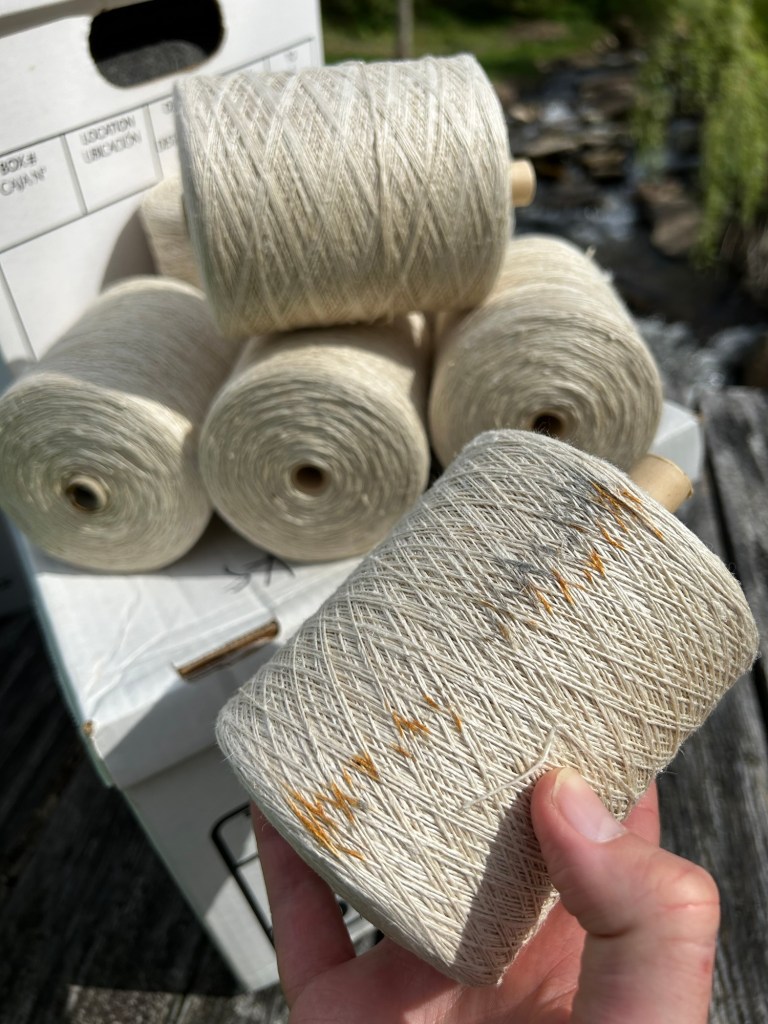
Some of them are stained from decades of storage, but I do think this still has the potential to make some really beautiful fabric as long as it hasn’t become brittle over the years. I can wind the outermost layer off and work with what is left to avoid that staining. I am less worried about cellulose fibers needing to be discarded as I am about protein fibers, and you’ll see why in a moment. But as long as it’s clean and undamaged, I may give it a try for personal projects.
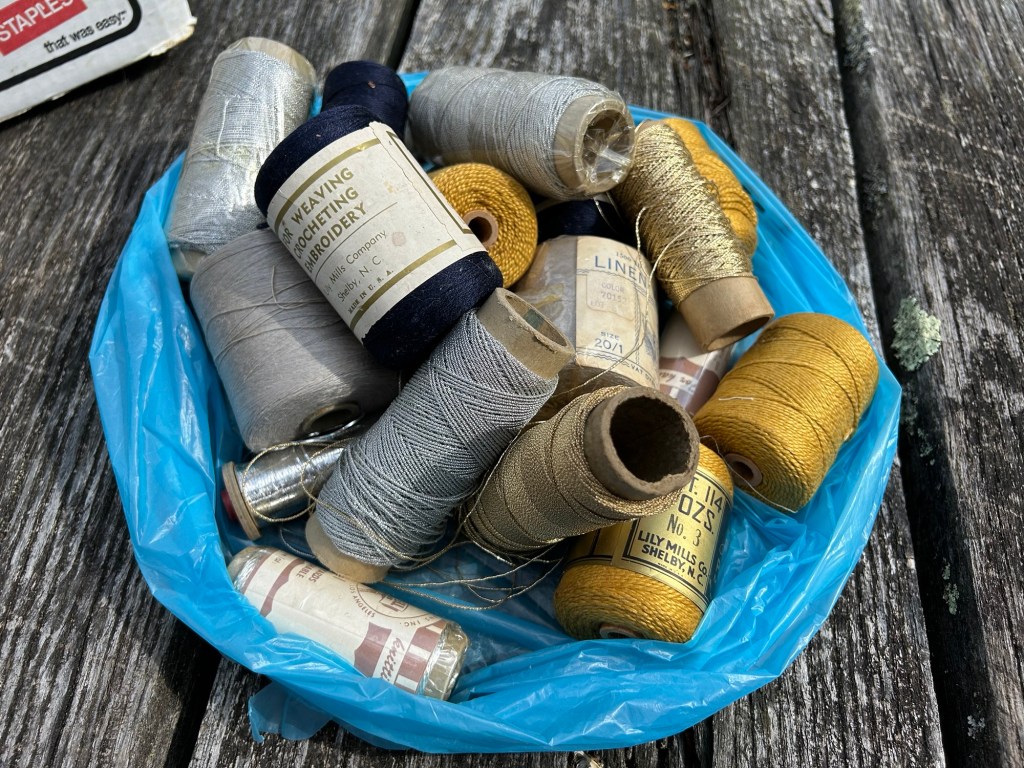
One bag contained little bits of shiny, sparkly accent thread that Nancy showed me had been put to use expertly in a few examples of her grandmother’s weaving. I’m going to hang on to these as well because they could be fun to play around with when the perfect project comes along.
And now we get to the wool. Nancy’s grandmother, she says, used to weave incredible twill yardage that would be sewn into men’s sport coats. I did find one piece in the bottom of a box showing what this fabric looked like. This is also exactly why I am cautious about holding on to any of the wool that she gave me. It’s risky to keep it in the house because it could attract little wool-eating critters that I simply won’t tolerate.
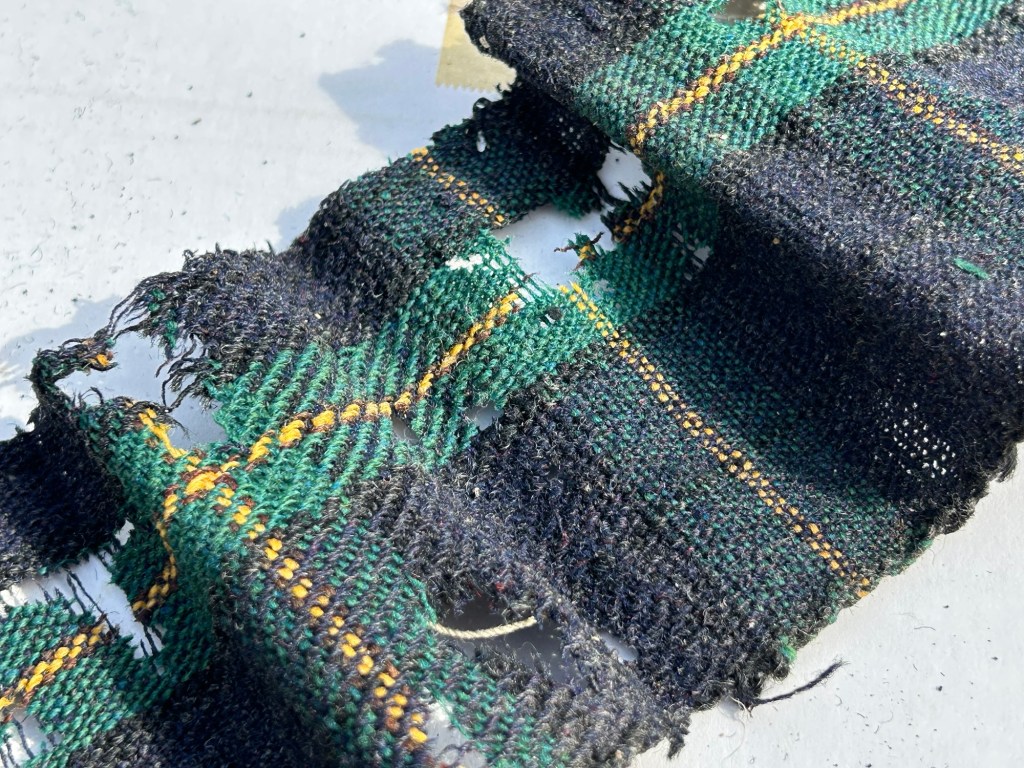
The wool is beautiful, though. Toothy, and the colors are heathered and complex.
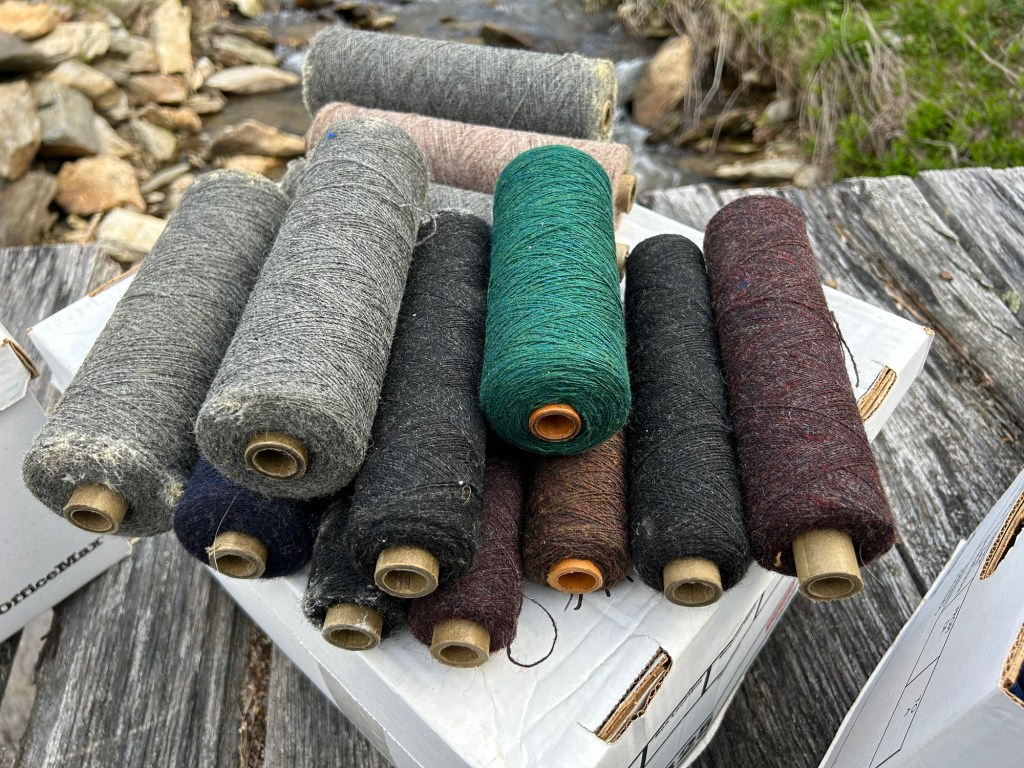

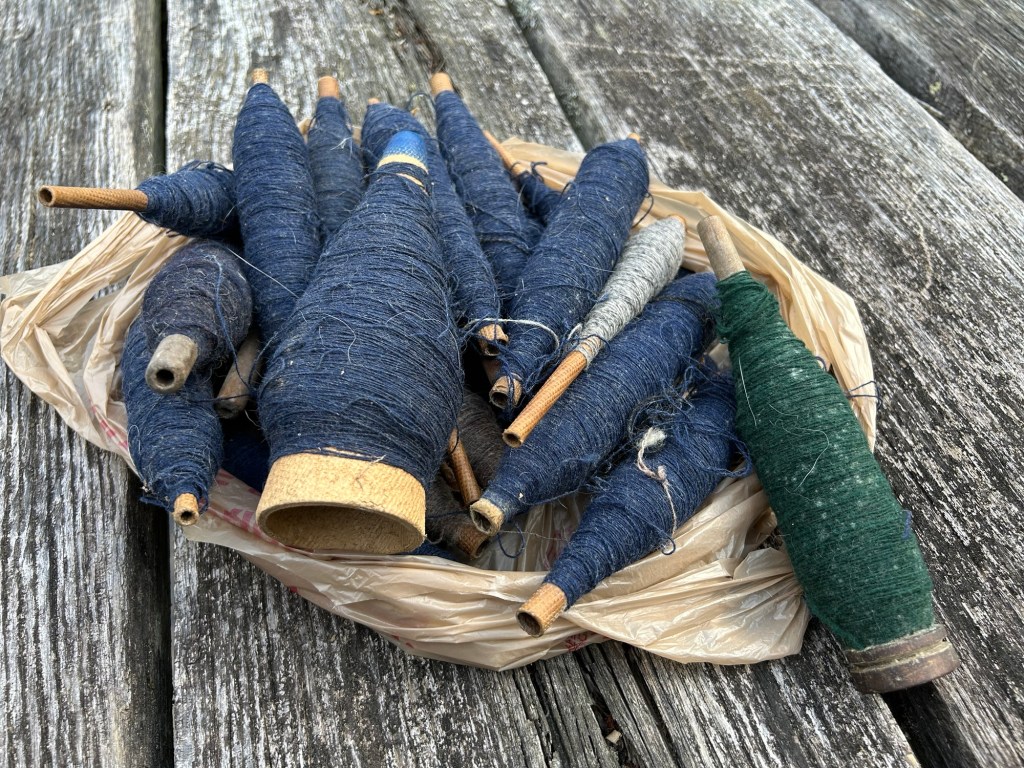
That being said, I know you can see why I just can’t keep a lot of this. The mildew and musty smell is likely to attract moths or beetles, and sometimes no amount of washing is able to get rid of lingering scents. Some of these might be ok – some of the tightly wound cones of gray wool could be salvageable, and if nothing else I can empty and repurpose some of these bobbins and pirns for display or even future use.
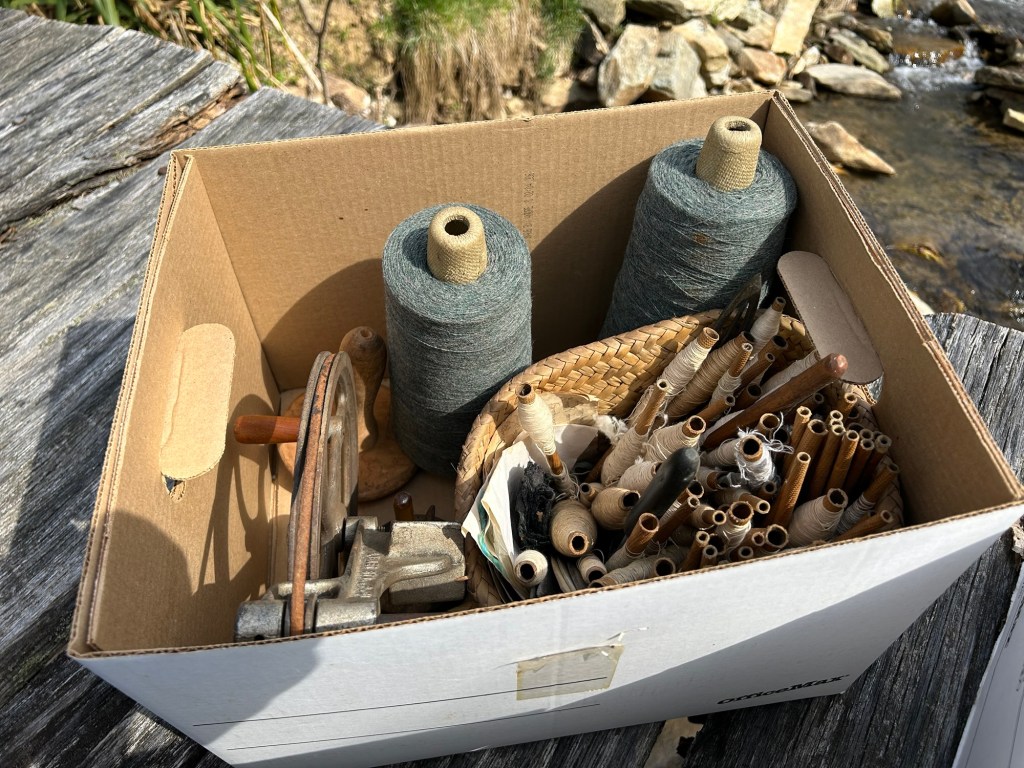
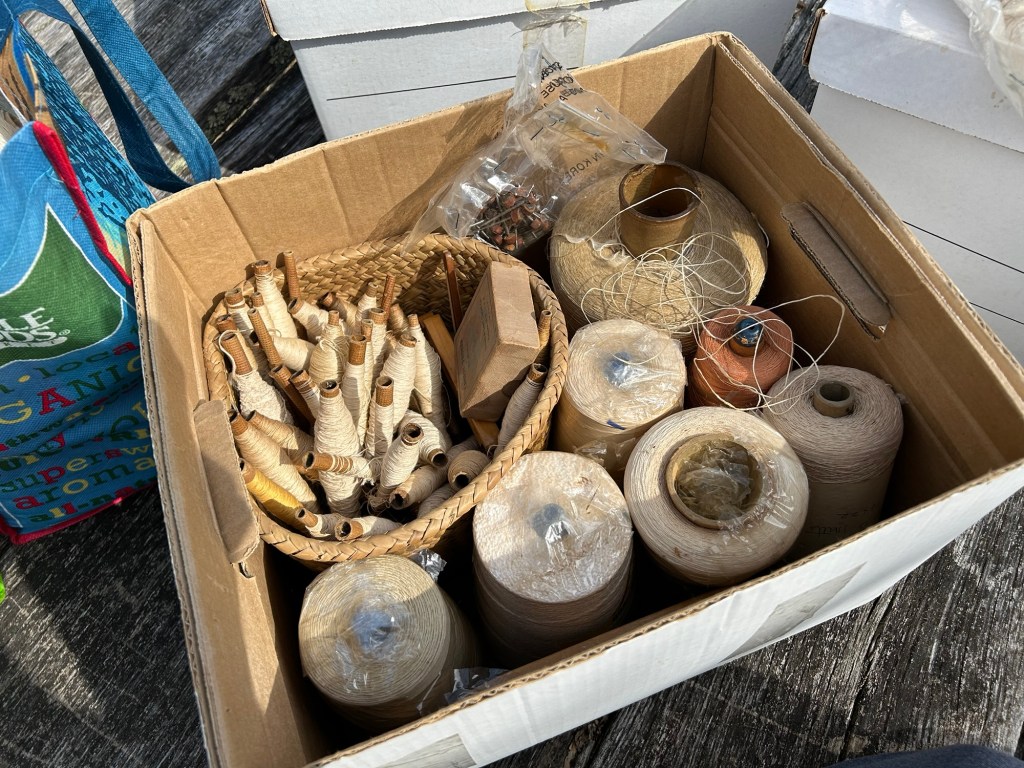
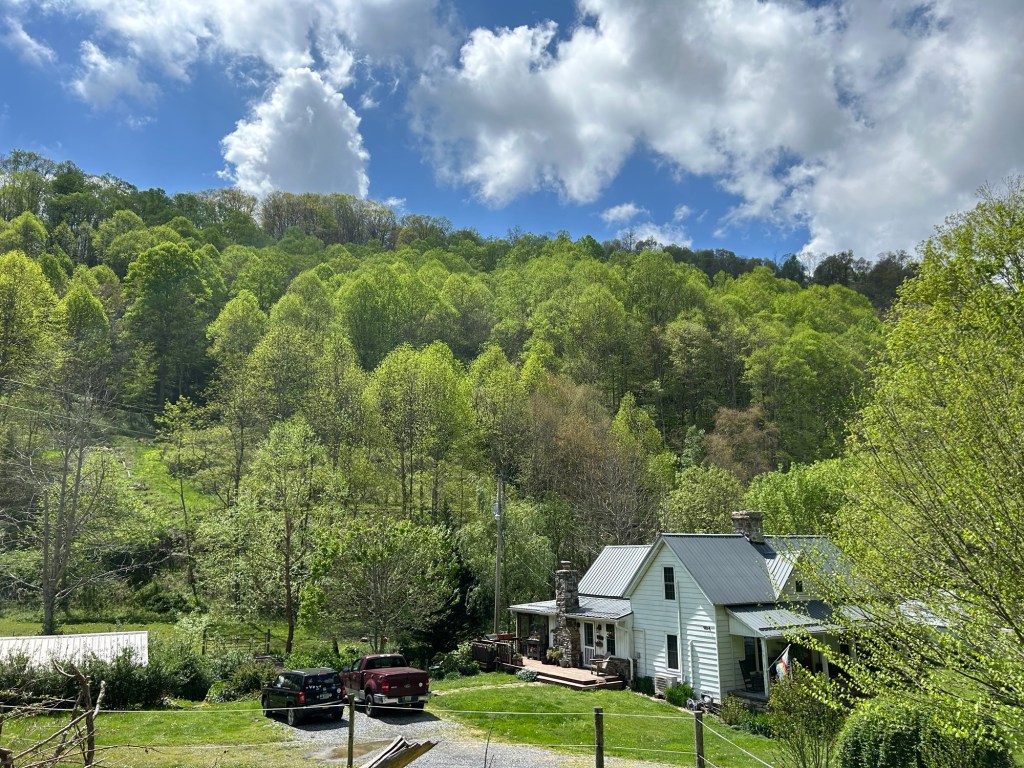
The remaining boxes had a lot of various bobbins with leftover thread still on them, different types of shuttles, and even an old bobbin winder that would be fun to clean and repair. The cones of cotton yarn still wrapped in plastic in the above picture were produced right here in North Carolina, which I think is really neat and I hope I’ll be able to do something with those as well. All in all, this was incredibly thoughtful and I’m grateful to have this shared with me and to have been given the chance to go through it and learn more about the weavers who came before me. Who knows, maybe one day my own equipment will be passed down to a new generation, each bobbin, cone, or scrap of fabric part of a story and a memory to be shared. And it’s all happening right here tucked into the mountains, along our dear Spring Creek.

 Spring Creek Textiles
Leave a comment