This year, perhaps because I am living somewhere new, I am acutely aware of the changing seasons. My husband and I moved to North Carolina at the beginning of January, and it has been so exciting to watch the mountains change from month to month. There seems to be something new blooming in our yard every week and being surrounded by nature makes the subtle changes all the more obvious. This year has been full of learning how to identify the trees in the forests that we didn’t have in Minnesota, observing the new birds and countless butterflies that frequent our yard, determining what is native vs. non-native on our property and seeing what pops up where. Living in such a rural area also means there are times when intentional planning is needed to prepare for the seasons to come. Do we have enough firewood to last the winter? Is the well house insulated enough? Do we have a plan for if we get snowed in, or lose power? There has been a noticeable shift in the air for the past few weeks – evenings are chillier, the wind blowing through the valley smells different, the trees are starting to drop their leaves. The mountains are also preparing for the colder months ahead.
My crafting has reflected this shift lately, too. I start to pull out half-finished projects knowing that I will thank myself when I can reach for the finished item later. Did I repair the hole in that pair of mittens that wore through in February? Is my sock drawer well-stocked? I recall promising my husband a new pair of fingerless gloves this year, I better finish those up before the cold weather sets in. And so it goes that this time of year, for me at least, is all about planning and preparation. There is a significant color story occurring in my projects right now, too.
Fall is my husband’s favorite season. He loves the changing colors on all of the trees, the chilly evenings wrapped in a blanket on the couch, the hot mug of coffee in the morning to warm your hands. Last summer I had planned to knit him a fall-themed cowl, but it never came to fruition. We were deep in the tumult of home repairs, packing, and preparing to put our house on the market. We sold our house and moved into a rental in October and spent the rest of the year living out of boxes; there wasn’t much time to relax, decorate and enjoy the season. I didn’t want to miss the opportunity to knit him this cowl for a second year, so I cast on at the beginning of August to give myself plenty of time to finish.
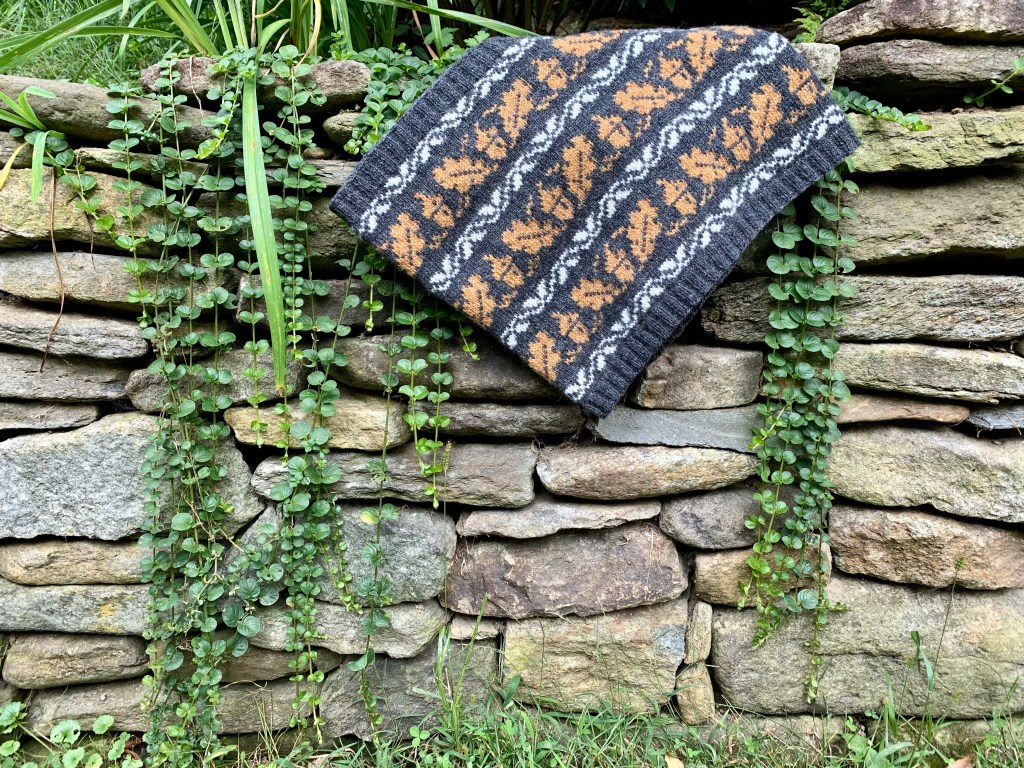
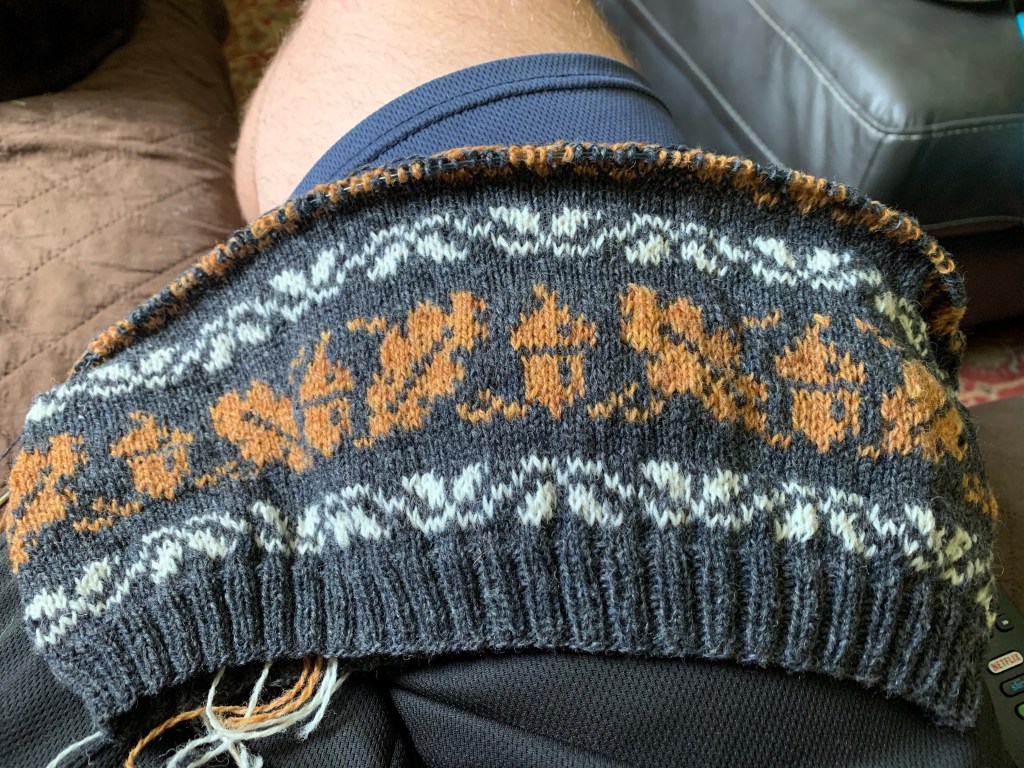
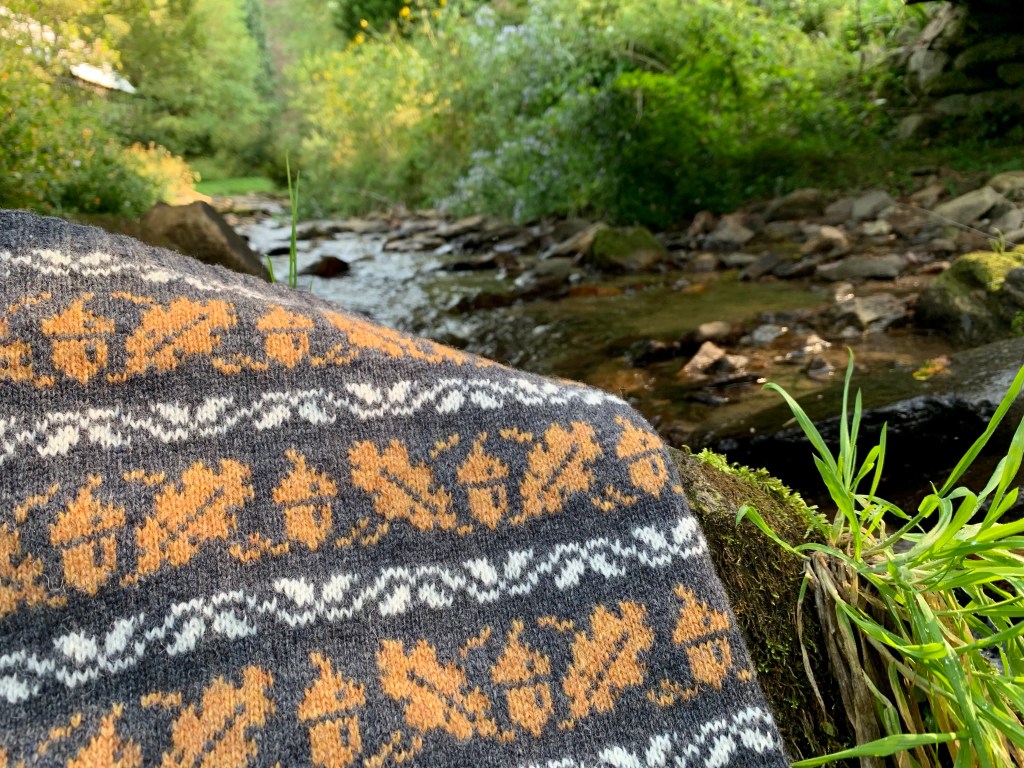
Knitting this cowl was quick and enjoyable, just a few weeks of sporadic knitting in the evening is all it took. The pattern is “Welcome Autumn!” by Monika Anna in Holst Garn Supersoft. The yarn was new to me, but I knew I would like it. I love a good toothy wool. I used colors Oxford, Goldcrest, and Bleached White, shipped to me from The Yarnery. While knitting, this yarn has a bit of a crunch to it, but after blocking it softened and bloomed into a beautiful, lofty fabric. One thing you will quickly learn about me is that I truly believe finishing is perhaps the most critical step in any textile process. I don’t consider a knitted item to be complete unless it has been washed and blocked. The fibers relax, the stitches even out and it turns the knitting into a smooth, cohesive fabric. Just look at the difference here between the pre-blocked cowl and the finished item.
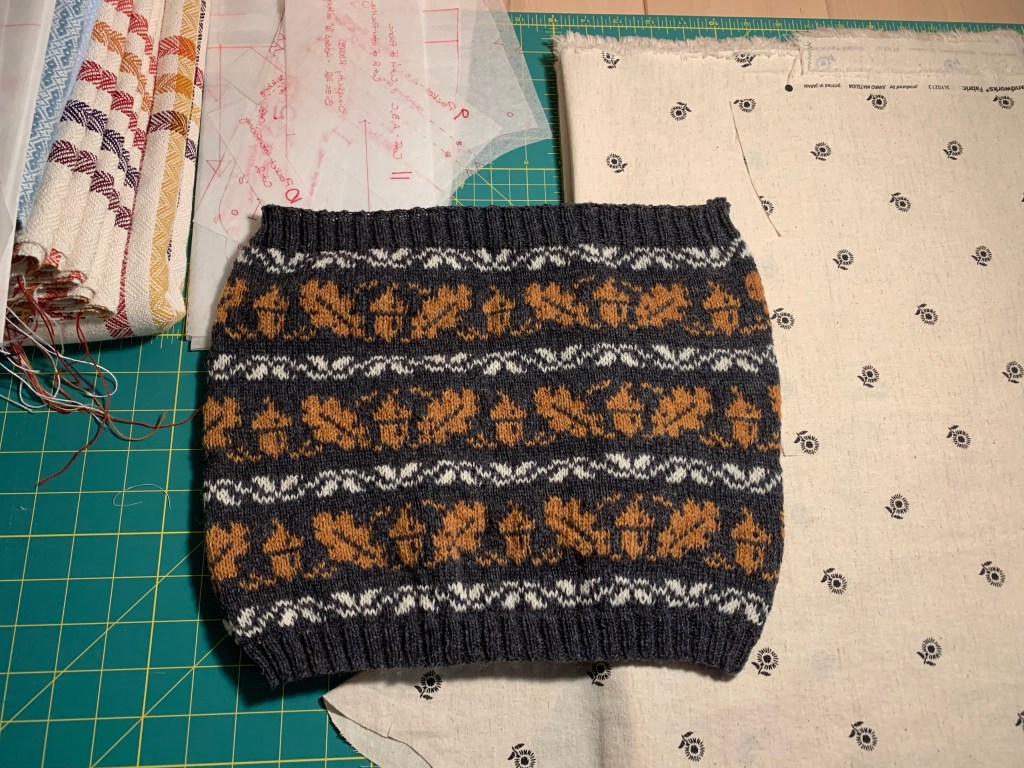
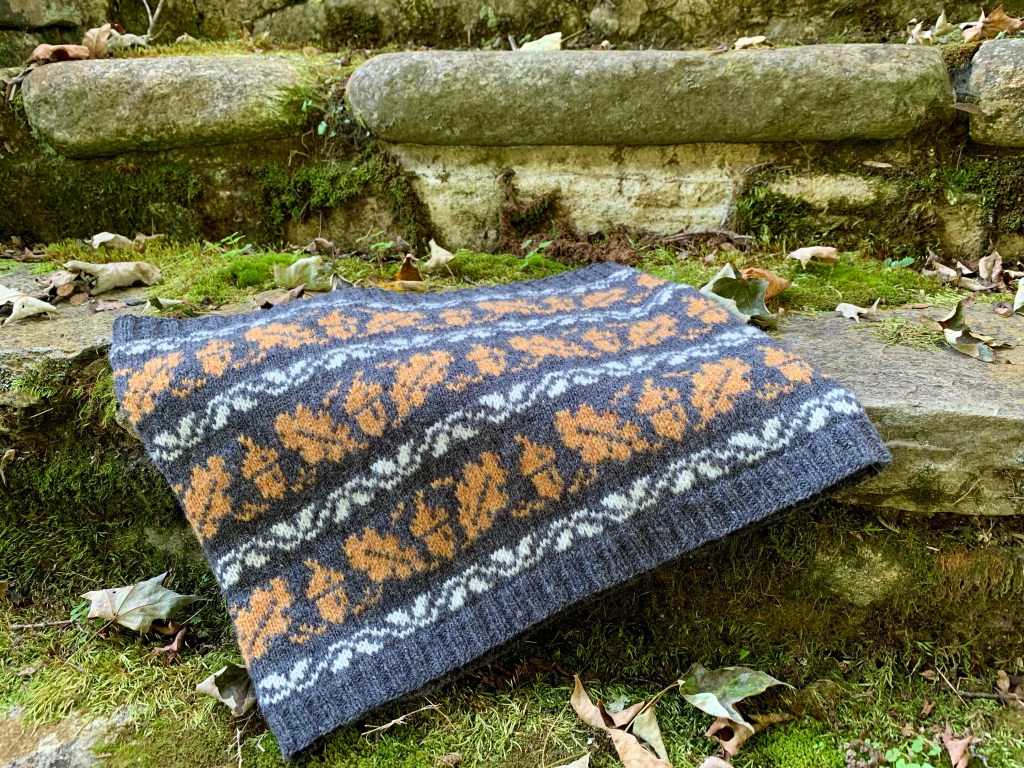
Glorious. Do you see the difference? It never gets old for me. I gave the cowl a bit of a rough handle in the water to encourage the wool to bloom and the fabric to come together just slightly. Once I squeezed the water out of the cowl and rolled it in a towel, I tugged it in all directions to make sure the tension evened out and the floats laid flat. I even put my arms inside the cowl and gave it several good tugs, repositioning it each time before finally laying it flat to dry. I love this part of the process.
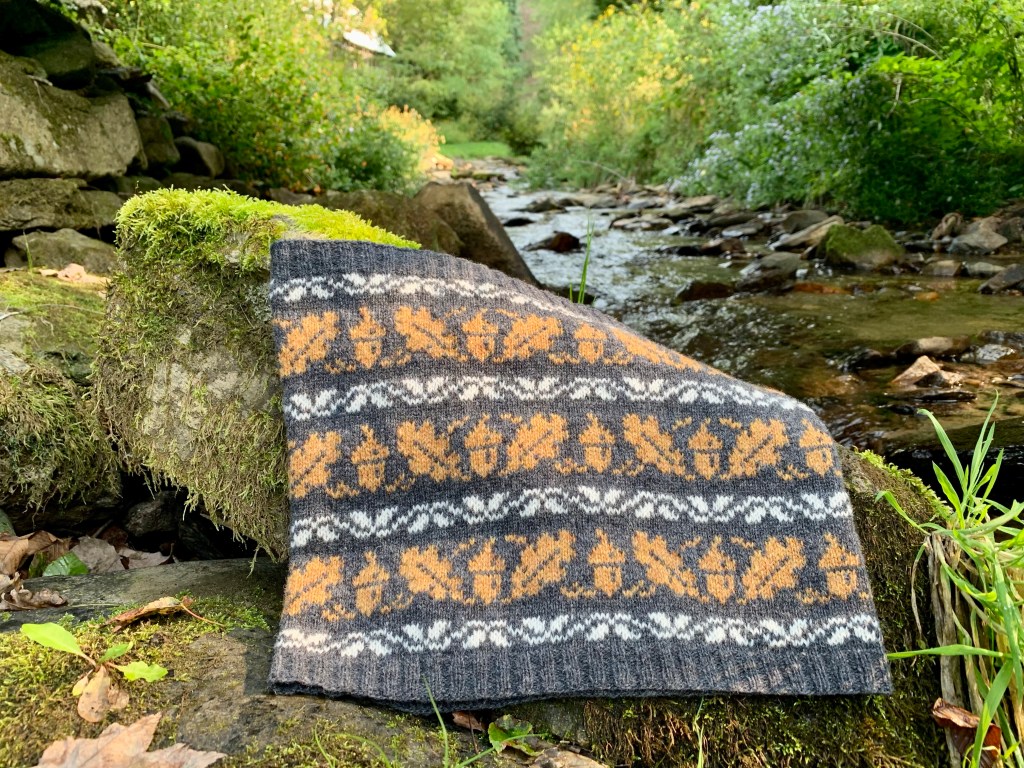
Though we’ve had chilly evenings lately, the days still warm up pretty quickly once the sun crests the mountains, but I’m sure this cowl will come in handy soon. I added an extra pattern repeat because I tend to be a slightly tighter knitting. Truth be told, I just like dense, sturdy fabric. I used the recommended needle sizes for the project (2.25mm for ribbing, 2.5mm for plain stockinette, and 3.0mm for colorwork) and assumed my gauge would have made the cowl too small as written in the pattern. It may not have been necessary to add that extra repeat, but I don’t think it did any harm other than causing me to break into a second ball of the main color for the last four rounds of ribbing. Better safe than sorry!
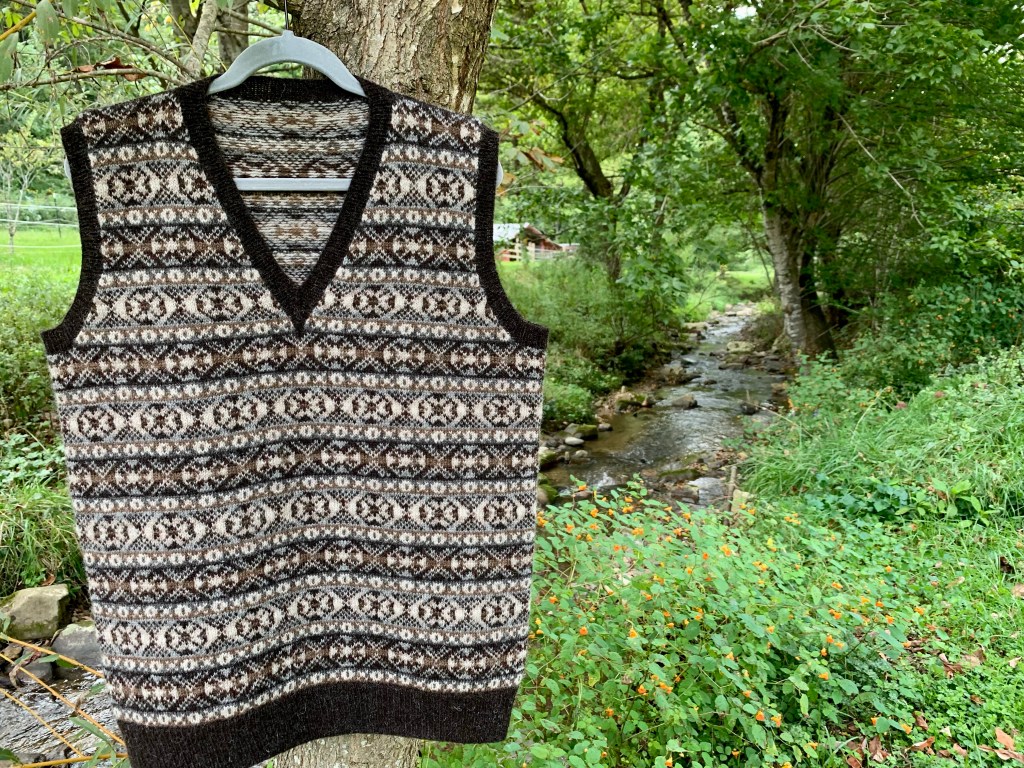
Speaking of safe vs. sorry, here is a tale of not trusting your gut. When my husband and I first visited North Carolina in May of last year, I of course needed a project for travel knitting. I had wanted to knit the Fall River Vest by Mary Jane Mucklestone for several years and I already had the yarn in my stash, so it was a great time to tackle a bigger project knowing I had a week of vacation coming up where I could really get a big chunk of the knitting done.
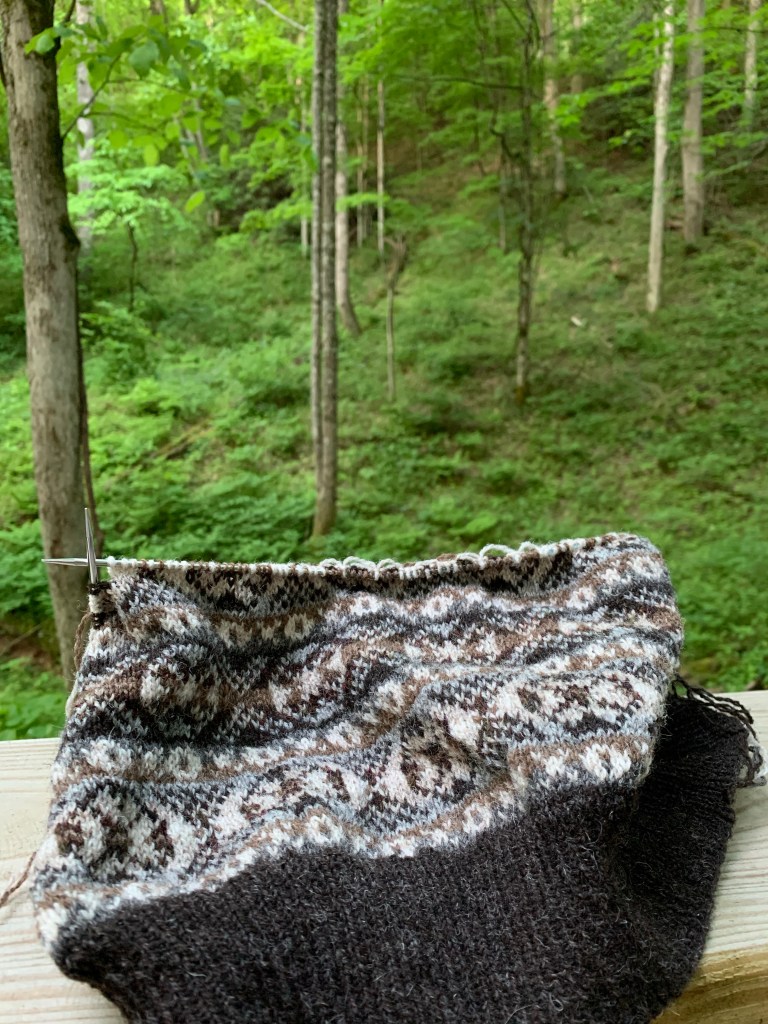
This project ticked so many boxes for me and made for some true comfort knitting – stranded colorwork, natural colors, a toothy wool, traditional patterning. It is all so satisfying. I worked with Shetland Spindrift in the recommended colors for the project, all natural shades of Shetland wool and the finished product is just ::sigh:: it’s just so lovely.
So where does the gut check come in? Well, do you know that feeling when you’re working on a project and something in the back of your mind keeps saying “no, I don’t think that’s right…” or “are you sure we don’t want to double-check that before we keep going?” I had that voice. I had that voice as I was knitting from the bottom up and getting closer and closer to the underarms. I thought, that doesn’t seem long enough. But that can’t be right, I double-checked the pattern. I looked at the photos. No, there are clearly five bands of patterning before the underarms. Never mind the fact that I always have to add length to the torso and sleeves of garments. I would stand up and hold it up to myself to reassure those thoughts that think they know better. I slipped it onto a longer circular needle so I could try it on in front of a mirror, tugging on it slightly because I knew of course that it was bound to grow several inches in blocking. Don’t trust that lie we all tell ourselves. The truth was right there in front of me and, because I am a smart and learned knitter (read: I have made this mistake more than once before), I conceded and added one more band of patterning before I began shaping the arm holes.

I finished that extra band and held the piece up to myself again. Fantastic, all is well. This is going to fit perfectly; it will fall exactly where I want it to at the waist. I finished knitting the vest, feeling incredibly smug because I bested the urge to ignore that voice and keep knitting. Again, I know that I always need to add length to patterns. It shouldn’t have been a surprise that I needed to add length to this vest as well. I patted myself on the back for a job well done, finally learning from past mistakes.
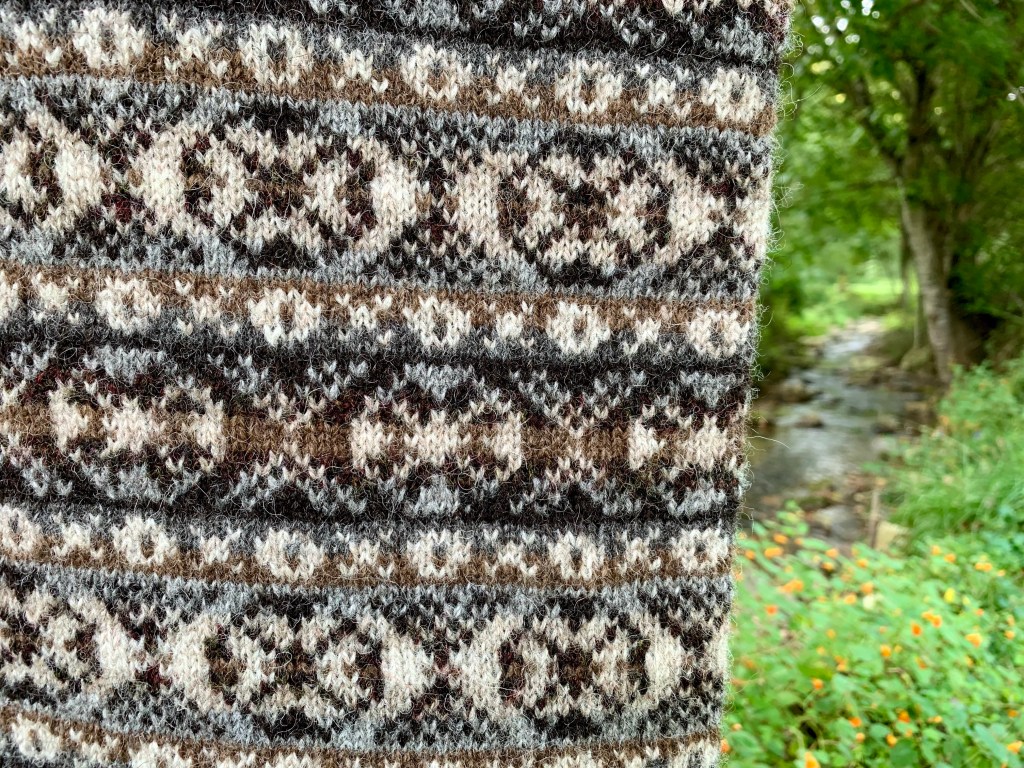
I cut open the arm holes and the neck, and I picked up stitches and completed the ribbing. I wove in all of my ends. I gave the vest a nice warm bath so it could soak and relax and bloom. I rolled it in a towel and laid it flat to dry. And then finally, I tried on my masterpiece.
It was too short.
How could this vest have betrayed me after I treated it so well? I gave this project everything it asked for. I listened to the voice of experience. I added extra rows. What happened? What happened was that after the first modification, I squinted. I saw what I wanted to see. I held it up to myself and lowered it down until it hit my waist where I wanted and I said “yeah, that looks like it sort of reaches my underarms.” I fooled myself, after all that, into thinking the problem was solved.
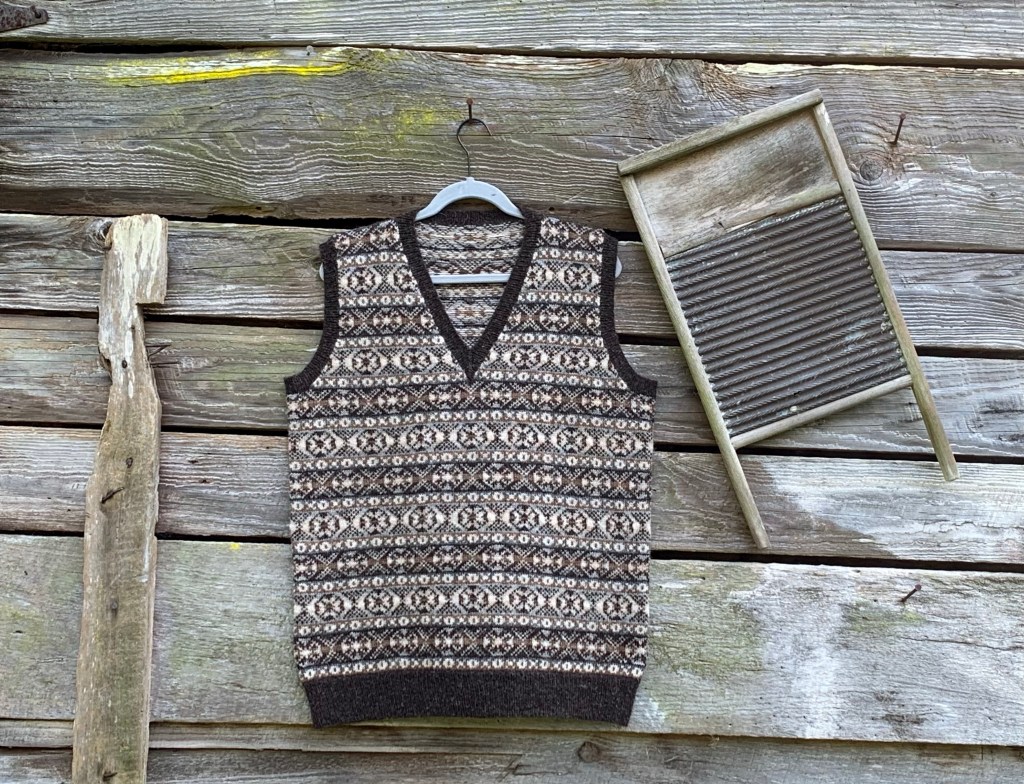
And so I did what any sane person would do, which is that I folded it up and shoved it into my closet, telling myself that it’s ok if I never wear it. It was the knitting experience that I wanted, not the finished garment. Not every project can be a winner. But the disappointment lingered. I really did want to wear this vest and finally, a year later, I have enough reason to make things right. A good friend of mine is getting married next month in Minnesota and if an October wedding isn’t the right time to don a Fair Isle vest, I don’t know what is. Knowing that I wanted to wear this vest for a specific occasion gave me the push I needed to really address the issue. This vest was knit from the bottom up, so I couldn’t easily pull out the ribbing in the bottom and add length; the knitting was going in the wrong direction. So I did the only thing I could do… I grabbed my scissors and I cut off the bottom of the vest. I then picked up stitches along the top of the ribbing and knit one more colorwork band before grafting the pieces back together.
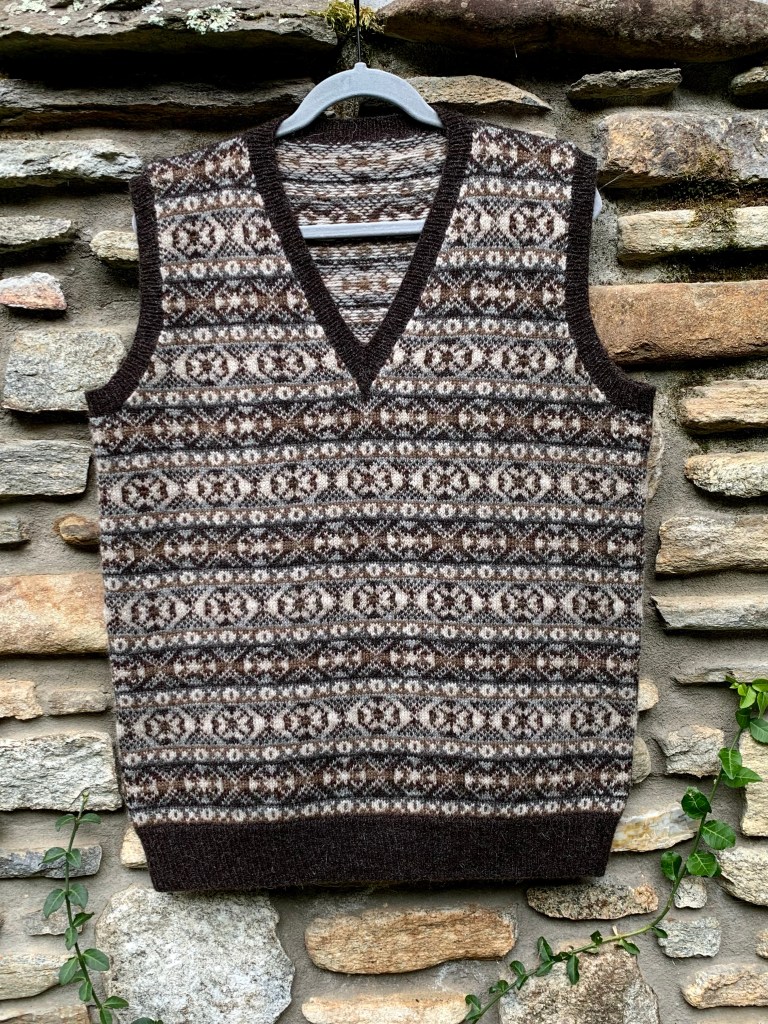
After another blocking, you can’t even tell that the dark band of large Xs and Os at the bottom was the result of reconstructive surgery. I am really pleased with the result, and the vest really does fit this time. I think it is going to pair really nicely with this oatmeal fabric that I am sewing into a button-up shirt to wear.
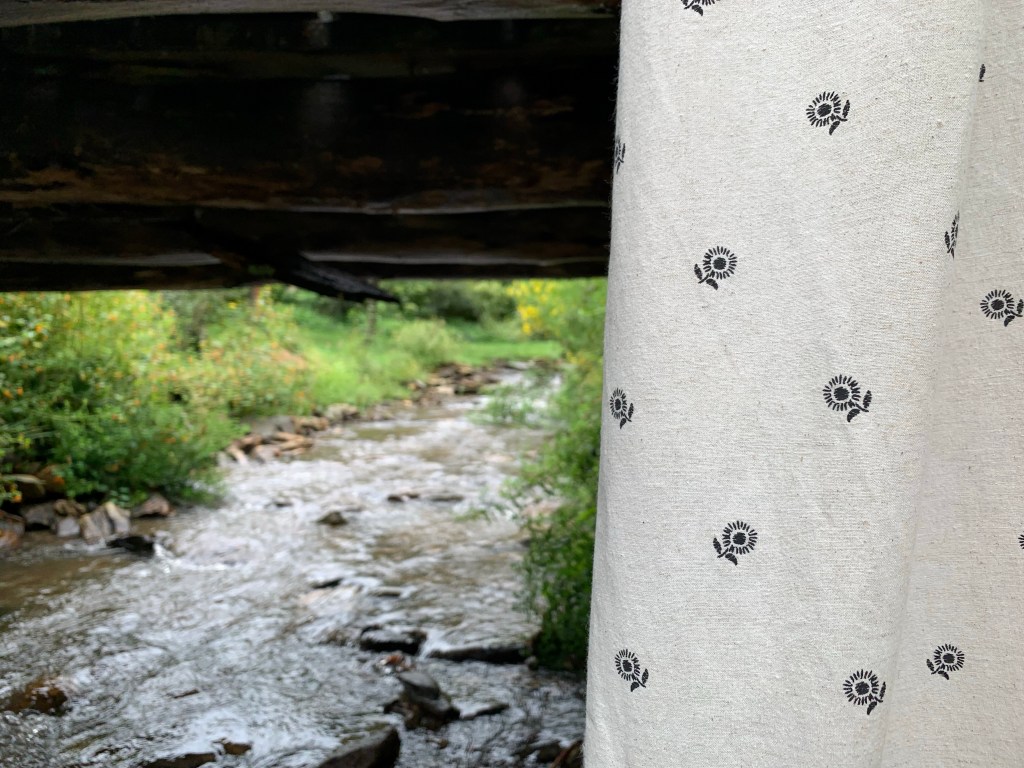
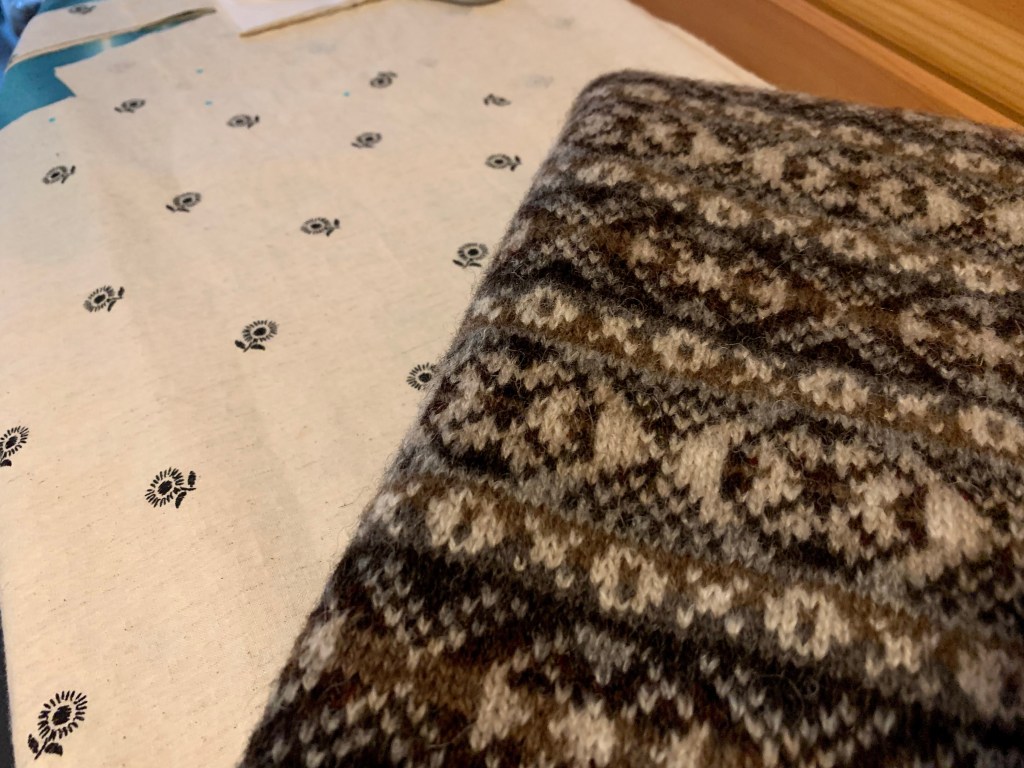
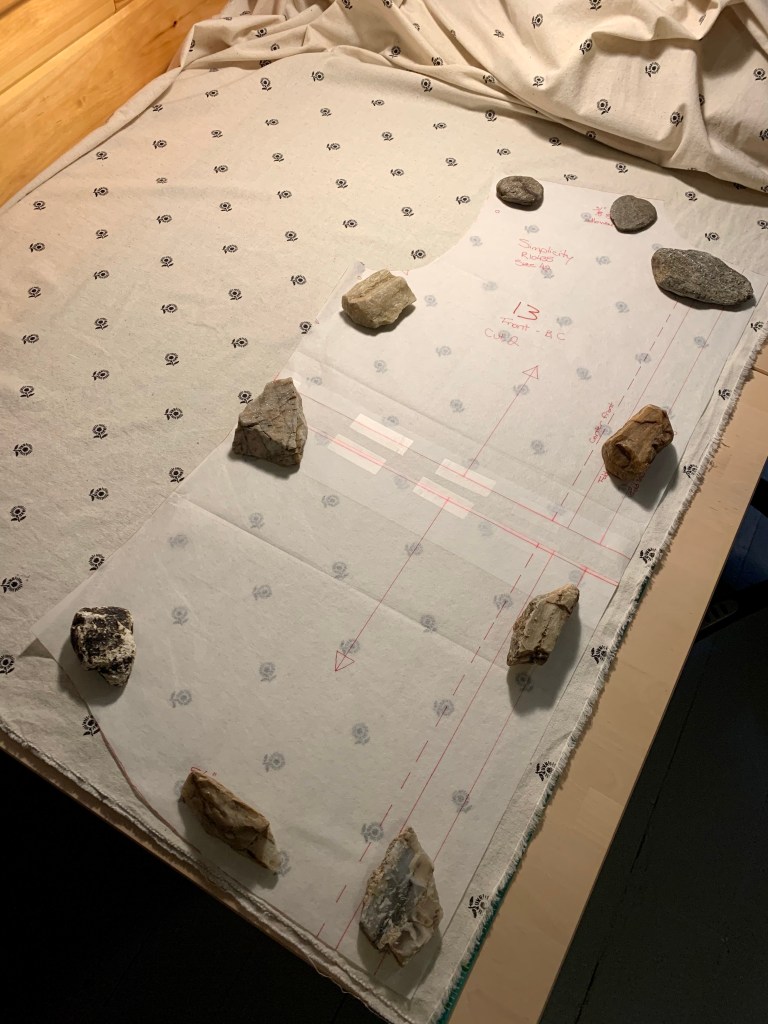
At this point I have only just cut out the pattern pieces and begun to construct the shirt, but I will share more about that project as it grows. I am really enjoying my “new” pattern weights, very graciously provided by the creek (Spring Creek) that runs along our property.
In one of the cowl photos above, you may have also noticed a stack of towels sitting on the table. I am incapable of focusing on just one craft at a time and my weaving projects are reflecting the changing seasons, too. I just took a run of 10 fall-themed towels off the loom made out of 8/2 cotton and am excited to share more details of those towels with you. They have been washed and are on deck to be pressed and hemmed.

I already have another set of towels on the loom for Halloween. They should be finished in the next week or two as well. I have a lot more to share about weaving in general, and these projects specifically, but that will have to wait just a little bit longer before I spill the beans. Keep an eye out for a future post.
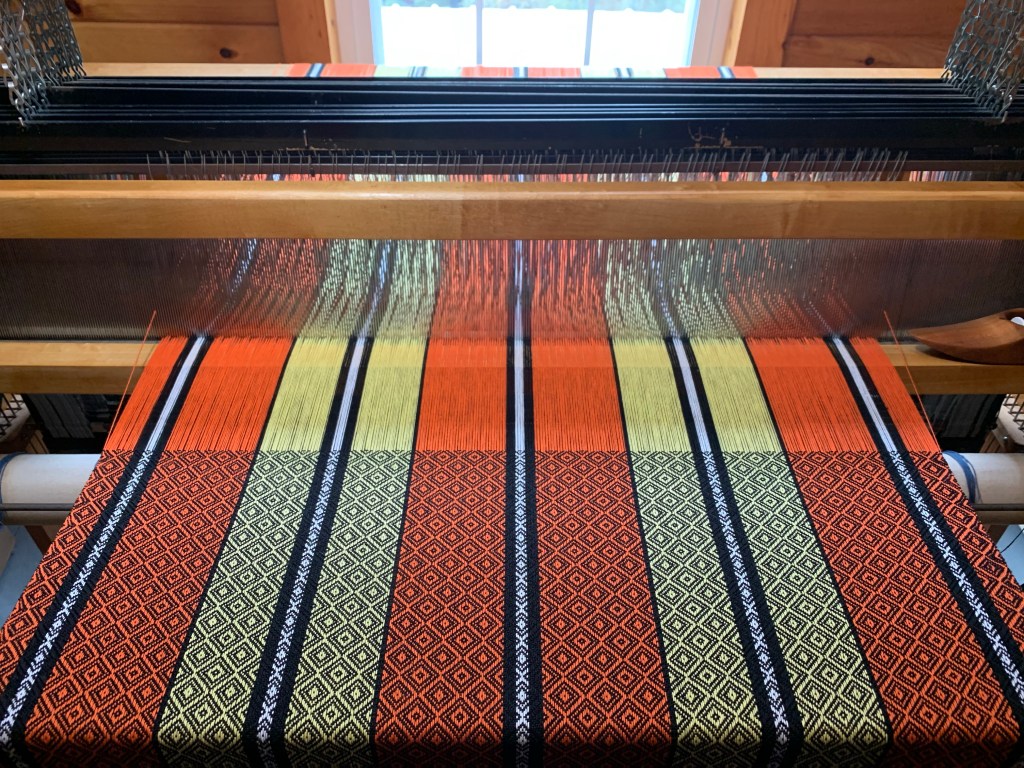
In between these two projects, I did throw a quick warp on the loom to weave up some linen fabric. I had been planning a few embroidery projects for my husband and I had ordered all of the thread and fabric I needed. But when the fabric arrived, I just wasn’t satisfied with it for the projects I had in mind. I figured I have this loom now, so I might as well weave my own! It turned out really nicely and I am looking forward to stitching my way through the winter by the fire, and the handwoven linen will make it all the more special.
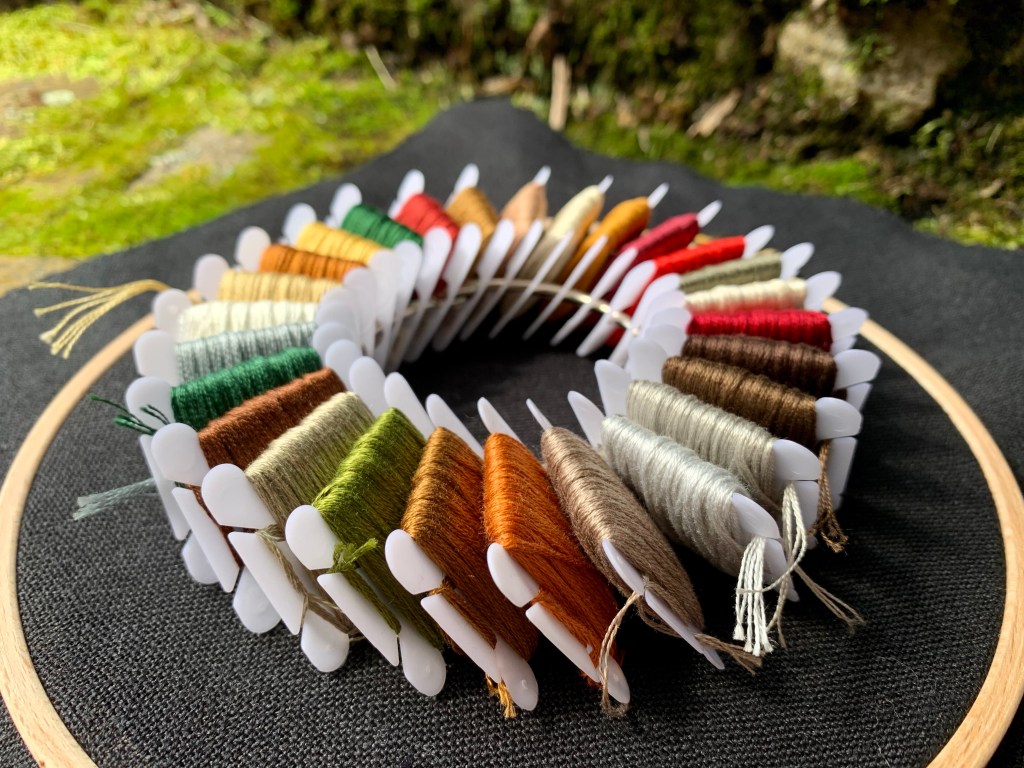
Lastly, on the wheel right now I have some beautifully dyed mixed BFL wool. I think I remember where this wool came from, but I am not 100% sure and will need to dig deep to find the label so that I can let you know. The colors are perfect for this time of year.
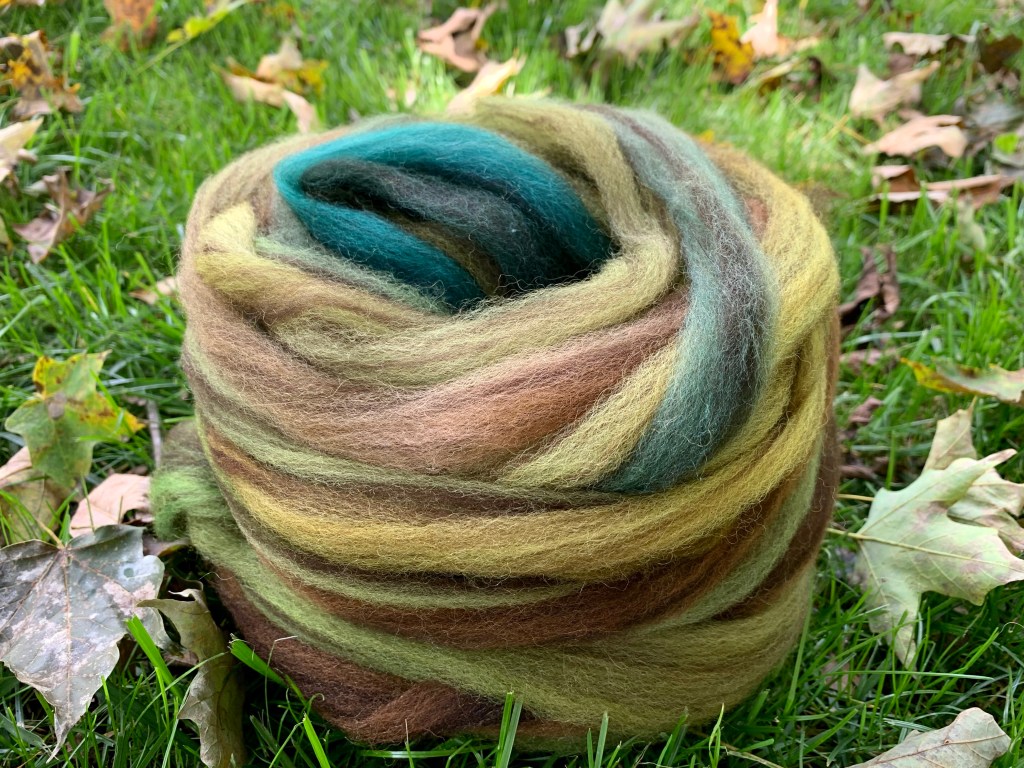
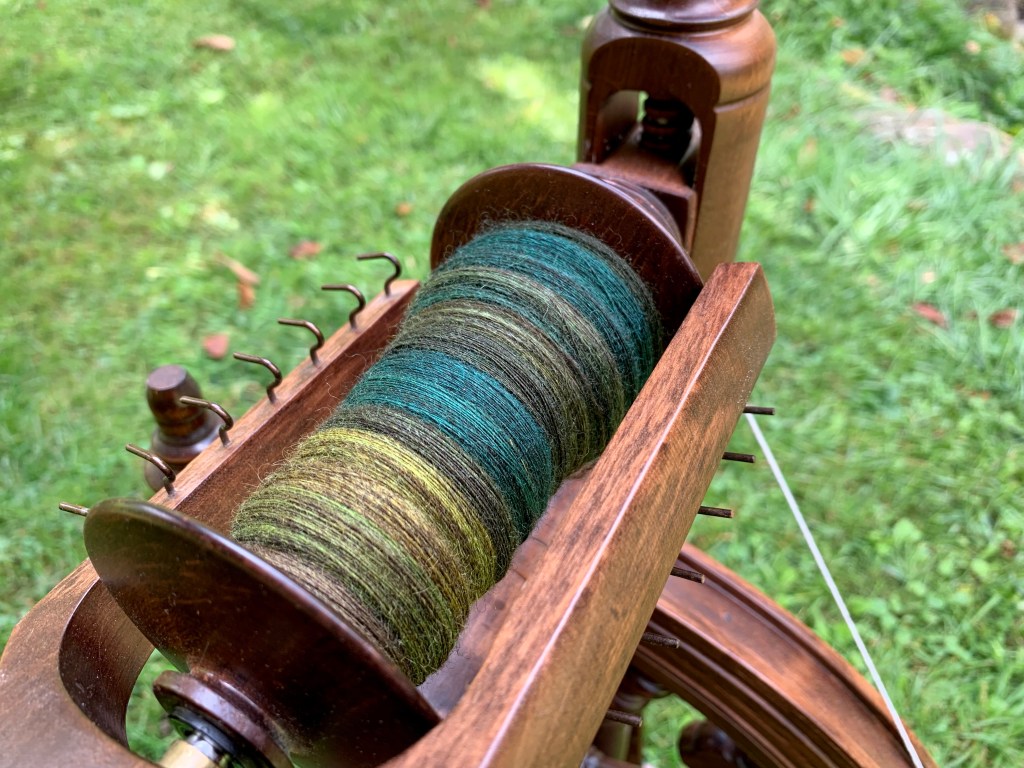
I have to admit, I haven’t spun since before moving to North Carolina, which means this project has been languishing since December. I am not a very fast spinner and I tend to get distracted by other projects, but taking my wheel outside for photos really makes me wonder why I haven’t been taking advantage of spinning by the creek. It’s the perfect spot.
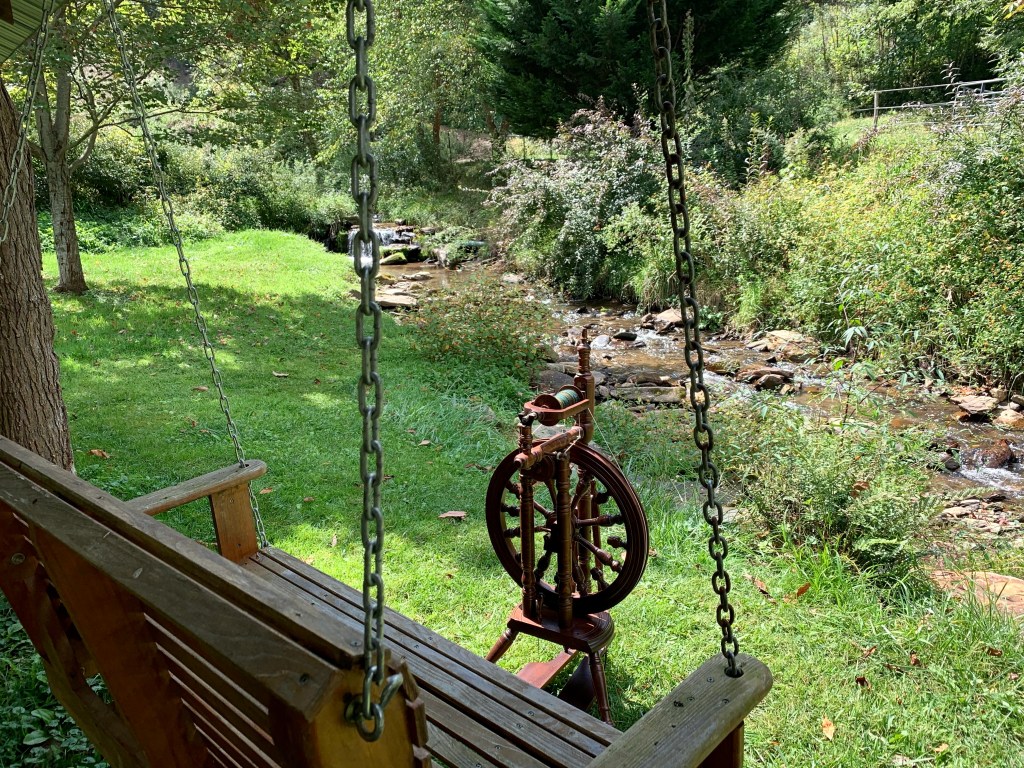
This project was intended to become sock yarn, with the hope that I can preserve the colors in a way that will be somewhat stripey in the finished project. I will chain-ply the yarn to keep the colors separate, but that technique also tends to emphasize inconsistencies in spinning, which does not work to my advantage here. I pull off random samples as I spin to ply it back on itself to approximate the finished thickness, and this is going to turn out to be a very thin sock yarn. It may need to be repurposed in the end, but until then I am enjoying the process and watching these colors pile up on the bobbin. I will have to get back to this project soon.
Until next time, stay creative.


 Spring Creek Textiles
Leave a comment